Context Views: What a Knowledge Graph Buys an Agent

Our knowledge graph agent beat the top published result on OfficeQA Pro V2, answering over twice as many questions correctly as search agents on the same model.
An agent working from a knowledge graph answered more than twice as many questions correctly as any search agent we ran on the same model. Using Distyl's Context Views, the knowledge graph agent scored 84.4% on Databricks' OfficeQA Pro V2, surpassing the top published result on the benchmark.
In an enterprise, answering a single question often takes far more than retrieval: agents must correctly reconcile information from many distinct sources. Most teams rely on capable search agents to answer questions like these, giving them direct access to every document in the corpus. But even with the right sources in front of them, these agents often fall short of the exact answer.
The knowledge graph agent instead works from a Context Views graph built from the documents. Context Views, the semantic layer of Distyl's platform, agentically extracts and normalizes facts from the corpus, linking them to their related entities in the graph.
Would agents answer more accurately from a knowledge graph than from the documents themselves? The answer is less obvious than many assume. To find out, we tested a knowledge graph against several search baselines on the OfficeQA Pro V2 benchmark, where agents must reconcile evidence across many U.S. Treasury records. Across OfficeQA and two other benchmarks, the results show when a graph is worth building and when a good search agent is enough.
TL;DR
Every agent we tested found most of the documents a question needed, but accuracy varied widely. The agent using a Context Views knowledge graph performed particularly well on the questions that required the most source documents, reconciling scattered evidence to arrive at a precise answer. On LongMemEval, where agents mostly search a single user's conversation history, the best search agents did about as well as the knowledge graph agent. On Distyl's own enterprise data, its lead was within error. The more an answer depends on reconciling evidence across many sources, the more a knowledge graph helps.
How Context Views compares on OfficeQA
OfficeQA Pro V2 is built on the U.S. Treasury's Accounts of Receipts and Expenditures, which span more than two centuries of federal finances. In this benchmark, 74% of the questions require an agent to find exact figures in more than three of these dense, table-heavy Treasury documents.
For this evaluation, we built a Context Views knowledge graph of the benchmark's Treasury records. The agent searches and traverses the knowledge graph, with the ability to open the original documents when needed.
We compared Context Views with five retrieval approaches that we configured with the same model (GPT-5.6 Luna) and scorer: a file search agent that reads the documents directly; a BM25 keyword search agent; a semantic (embedding) search agent; a hybrid search agent; and an agent that first searches a short wiki of the corpus generated by OpenWiki, an open-source tool. All six approaches use the same documents and differ only in how they prepare and search them.
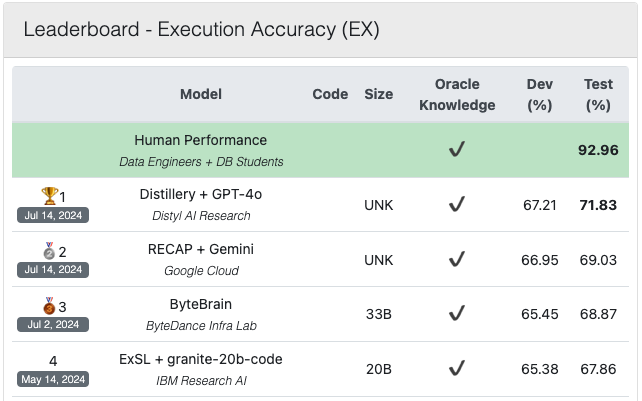
We scored all six agents on exact-match accuracy, which counts an answer as correct only if it precisely matches the answer in the benchmark. At 84.4%, Context Views achieved the highest score we know of on OfficeQA Pro V2. Other top-scoring systems ran on stronger models and still came in behind: Mixedbread's Toast 1 search agent scored 70% with GPT-5.6 Sol, and the winning entry at Databricks' Grounded Reasoning Cup scored 63.3% with Claude Opus 4.8. Among other teams that also used GPT-5.6 Luna, the best published score was 38.8%—nearly identical to our best search agent (BM25, 38.9%), and about half as accurate as Context Views.
Understanding the graph's advantage
At first glance, these results suggest that retrieval is increasingly difficult as the number of required documents rises. The semantic search agent, for example, correctly answered 39.1% of questions involving one to three documents, but only 21.7% of those involving ten or more. Yet even on questions with the fewest documents to find (one to three), every search agent scored below 50% (vs. 87.0% for the knowledge graph agent).
Retrieval isn't the hard part
Of the six agents, the knowledge graph agent had the highest recall (97.2%), meaning it found the largest share of the questions' source documents. If this alone explained why the knowledge graph agent answered more questions correctly, teams could match its accuracy with a better search agent.
The results show otherwise. While all six agents found most of the source documents (81% to 97%), accuracy varied far more widely (26% to 84%). The semantic search agent, for example, found almost as many source documents as the knowledge graph agent (91.8% vs. 97.2%), but answered just over a third as many questions correctly (30.0% vs. 84.4%). A team evaluating the semantic search agent by recall alone would conclude it was performing well, even though most of its answers were wrong.
Most errors come from interpretation
The difference largely comes down to what agents do after retrieval. When answering incorrectly on questions that involved only one or two source documents, the file search agent had almost always found every document the question required. The agent made its errors afterward, while reading the documents and calculating its answers: for example, it overlooked a relevant row in a table, used the balance of the wrong account, applied the wrong inflation adjustment, or miscalculated a multistep ANOVA on figures adjusted for GDP.
Like the file search agent on the South Quay question, the other search agents often found the right table but selected the wrong rows or misinterpreted the scale or units. Many of their answers were close to correct, but not exact. Across the benchmark, these near-misses accounted for roughly a third of the knowledge graph agent's lead: when we also accepted answers within 5% of the exact answer, each search agent's score rose by 17 to 19 points, while the knowledge graph agent's score barely changed.
Interpretation in the knowledge graph
Resolving the "Ditto" row is one example of the interpretation Context Views builds into its graph. Across the corpus, Context Views:
- Interprets documents once, before any question is asked. Because Context Views interprets the evidence when it ingests the corpus into a knowledge graph, the agent retrieves values that are already linked to the entities they refer to. Every agent that answers from the graph can reuse this interpreted evidence across questions.
When answering a question, the knowledge graph agent only has to determine which evidence is relevant, verify a figure against its origin in the source document when needed, and perform calculations. Meanwhile, a search agent has to reconstruct the links between values and entities every time it answers a question, whether it reads the files directly or searches an index that primarily organizes passages for retrieval.
- Extracts each fact in context and stores it as structured knowledge. Unlike a rule-based parser that treats each matching string independently, the extraction model reads and interprets each fact together with its surrounding text or table, as it did with the "Ditto" row. Context Views also normalizes the facts and figures from the raw documents into structured values, each linked to its source and to the entity it belongs to.
- Links values that belong to the same entity across documents. In the benchmark, the payments recorded for a particular district might be scattered across Treasury reports from many different years. Context Views connects these payments across any number of reports, so at question time the agent can retrieve the values it needs without searching individual documents.
Answering from the graph is cheaper and faster
For the knowledge graph agent, higher accuracy did not come at a higher cost: it averaged $0.11 per question, compared to $0.37 for BM25, $0.38 for file search, and $1.18 for both semantic and hybrid search (neither shown in the chart above). As the chart shows, the knowledge graph agent also answered faster in most cases. While the search agents read the raw documents as they answer each question, the knowledge graph agent usually only has to read short, source-linked nodes from the graph, where much of the evidence is already structured in advance.
The knowledge graph agent's advantages in cost and speed increased with questions that required more source documents, where it had far less input to process than the search agents. On these questions, the search agents had to find each additional document, while the knowledge graph agent could retrieve evidence from several documents with a single lookup. As a question spans more of the graph, the knowledge graph agent can also retrieve a summary node—a single node that condenses related information from many smaller nodes—to more easily locate and use the many pieces of evidence it needs.
Consider the questions with ten or more source documents, where the knowledge graph agent was about 13 times cheaper and more than 3 times faster than the file search and BM25 agents. Here, the knowledge graph agent also saw lower cost and latency than on questions with fewer source documents, attributable in part to a lack of unusually long runs in the group with ten or more documents. The remaining difference reflects the reasoning and token use that individual questions required, regardless of their number of source documents.
On questions with four or five source documents, the knowledge graph agent did not see a cost or speed advantage. Some of these questions may have been unusually difficult: we observed a decline in accuracy for nearly every agent, along with several long, verification-heavy runs from the knowledge graph agent.
Beyond OfficeQA
We also tested Context Views on two other benchmarks: LongMemEval-S, a set of 500 questions about a user's history across many conversations, and Distyl Unstructured QA, a set of 70 questions over unstructured data from our own GitHub, Linear, Notion, and Slack. On both, Context Views scored within the 95% confidence intervals of the strongest search agents we tested on these benchmarks (semantic and hybrid).
While OfficeQA involves reconciling figures from dense tables and performing cross-document calculations, LongMemEval mostly requires searching one user's conversation history. For questions like these, a capable search agent was enough. We also compared Context Views with HydraDB, which reports 90.8% for its own full pipeline with Gemini 3 Pro. HydraDB's retrieval API, run with the same reader model as our other baselines, scored 81.4%.
On some measures, a graph did outperform a capable search agent.
Where Context Views led on LongMemEval
Compared with two search agents (semantic and hybrid) and two single-call retrieval setups (BM25 and HydraDB's API).
- Preference questions: 86.7%, ten points above both search agents.
- Questions about the longest chat histories (51 or more conversations per question): 91.4%, the best of any approach.
Where Context Views led on Distyl Unstructured QA
Compared with four search agents (semantic, hybrid, BM25, and file search).
- Decision rationale questions, which involve using a trail of documents to reconstruct the reasoning behind a particular decision: 7 of 8 correct, higher than every baseline.
- Cost per question: 37% less than semantic search and 50% less than hybrid search, while scoring higher than both.
Distyl Unstructured QA also included entity resolution questions, which involve recognizing when different documents refer to the same entity. A graph would seem well suited to these questions. Context Views tied the best search agent's score (15 of 21 correct), though this may be an artifact of the difficulty distribution of this question set.
Where Context Views did better, the answer depended on evidence the agent needed to connect before answering. On LongMemEval, the agent had to recognize user preferences from earlier conversations and determine which details were relevant to the question, or locate and combine evidence from long chat histories. On Distyl's data, the agent had to assemble the reasoning behind a decision from several different unstructured sources.
From finding answers to assembling them
Coding agents have shown how much a capable agent can handle by searching files directly, without an index built in advance. But the case for a better search agent is built on codebases and chat histories, where the right answer is usually written in the words an agent searches for. On LongMemEval, our results agree.
As agents continue to move from codebases into the rest of the business, more answers will have to be assembled rather than found. Context Views shows that a knowledge graph can interpret and connect the evidence that enterprise agents need, across however many documents a task involves. As their work grows more demanding, what separates agents is what they make of what they find.
In this evaluation, the knowledge graph agent worked from Context Views, the semantic layer of Distyl’s platform. Learn more here.
Citation
Distyl AI, “Context Views: What a Knowledge Graph Buys an Agent,” Distyl AI Blog, Nov 2026.
@article{distyl2026contextviewsofficeqa,
  author  = {Distyl AI},
  title   = {Context Views: What a Knowledge Graph Buys an Agent},
  journal = {Distyl AI Blog},
  year    = {2026},
  month   = {Nov},
}
Sources
- Databricks AI Research, Evaluating AI agents live at the Grounded Reasoning Cup, Aug 2026.
- Databricks AI Research, Introducing OfficeQA Pro V2: A new benchmark for enterprise grounded reasoning, Aug 2026.
- HydraDB Research Team, Remembering what is still true across long conversations: LongMemEval, Aug 2026.
- Mixedbread, OfficeQA-Pro V2 benchmark: Toast 1, tested Aug 2026.
- Wu et al., LongMemEval: Benchmarking chat assistants on long-term interactive memory, ICLR 2025.
Results as of October 6, 2026.